
November 30, 2022: ChatGPT launches. Early in 2023, its popularity skyrockets. Soon after, I begin seeing AI headshots popping up.
Oh crap.
Does this mean my business is now irrelevant? Am I going to get replaced? Will people now be able to get the “perfect” headshot without ever having to visit a studio, and for a fraction of the cost (or even free)?
To be fair, the initial AI headshots were appallingly bad. Eyes looking subtly in different directions. Everyone had the silky-smooth hair of Thor. Front teeth looked misaligned. And don’t even get me started on the fingers. But to also be fair, they’ve gotten a whole lot “better” since then. Much more lifelike than the original iterations.
Hence the initial concern.
I was not one of the photographers who jumped on the “doomsday bandwagon” of despair. But I have to admit, there were some periods of self-doubt and genuine concern. I was only two years into my business at the time, and a little voice in the back of my head wondered if I would make it to year 3.
But what has happened since?
AI headshots haven’t just failed to put a dent in my business; the exact opposite is happening: Top-Tier Headshots is busier than ever.
In fact, it seems like my business has gotten busier since the rise of AI.
And I haven’t lowered my prices. I’ve actually raised my prices during that time period.
So what gives?
The technical is only the foundation
While I work hard to achieve technical excellence, that’s only the foundation. Quality headshots and branding images go way beyond putting people in good lighting and clicking the camera button.
The biggest issue my clients come to me with is not that they were put in bad lighting in their previous headshots (though that’s unfortunately often true) or that the photographer’s camera wasn’t good enough. Their biggest concern is that they don’t feel comfortable in front of a camera, so the finished product doesn’t “feel like them.”
My Expression Coaching fixes that.
I go “all-in” on the human factor
You can have the best lighting in the world. But most people still do not know how to smile on command (it’s not your fault btw). Our best, most natural expressions are reactions. My job as an Expression Coach is to pull the most genuine side out of you so that when people see your headshot, they see you.
It’s that soulful humanity in a photo that creates the kind of powerful connections that open doors for people.
Think I’m exaggerating? Ask me about my clients that are advancing in their careers, getting more sales conversations booked from LinkedIn, getting promoted, getting recruited, etc. And all of them credit these authentic headshots as a key factor in their success.
The human factor wins. All day, every day.
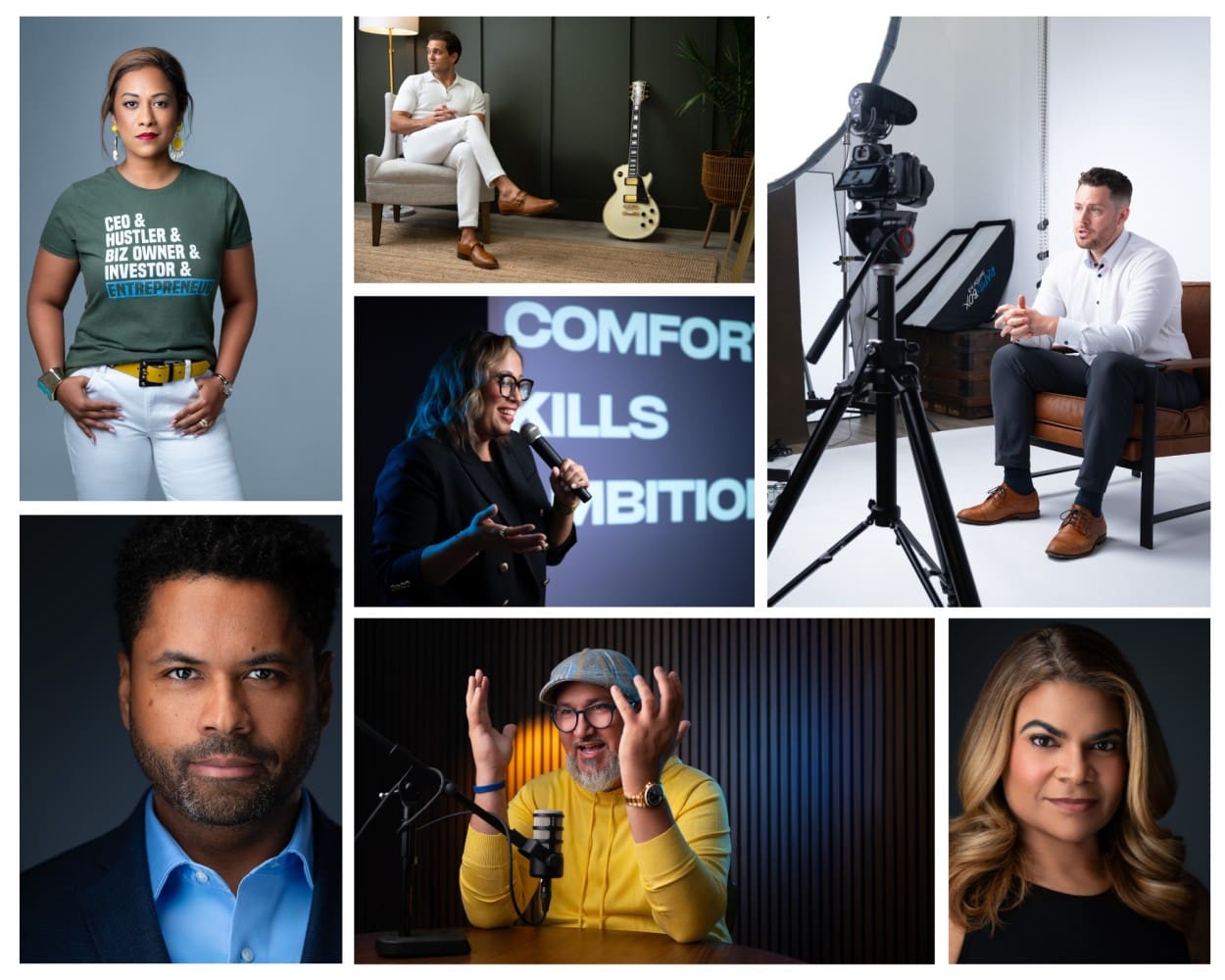
It doesn’t look like you…because it’s not you
I have an increasing number of clients who tried the latest AI headshot versions (several this year already) and who still ended up booking a session with me.
The reason? As good as they were, something about the images didn’t “feel” like themselves.
And how could they? AI generated images use material from other sources/people to essentially make a more “perfect” version of you. A version that is absent of any flaws, any wrinkles….and any soul.
I can tell you this for certain: the way to resonate with your audience is not to appear flawless. It’s having the boldness to show up as you, warts and all (but don’t worry, we can soften it with some retouching 😊)
A top ten way to damage your brand
While I don’t have a mountain of data to back this up, I have growing anecdotal evidence suggesting what should be obvious: replacing all your images with AI generated ones erodes trust with your network instead of building it.
There’s the person who told me that they have clients who chided them for not being willing to show their own face online. There’s the government official in the Netherlands who got elected using AI headshots in her campaign, and is now being seriously questioned because she doesn’t really look like that in real life.
The choice to not show your real face online may cost you more than the money you saved generating the headshots in 30 seconds on your phone.
My clients have an aspirational mindset
If you were going to be featured on the cover of Forbes or Wall Street Journal or Time Magazine…would you want the cover photo to be an AI generated approximation of you? Or would you want it to actually be YOU on the cover?
I don’t even need to hesitate. If you asked me, I’d want it to be me on the cover. I earned it. I did the thing that got me there. No one gets to take that place from me, not even my “avatar.”
My clients would all tell you the same thing. They may not be on the cover of Forbes…yet. But they are going places. Writing books. Speaking on increasingly bigger stages. Delving into bigger industries. Working with higher level customers. Solving bigger problems.
My clients are stepping on the gas pedal.
And when they come to me, it’s not simply some pretty pictures they’re looking for. What they really want are brand-amplifying assets that showcase them as the rockstars they truly are. Images that help position them as the go-to experts and sought-after thought leaders they’re already becoming. And when they’re speaking on stage, they need the real world social proof that demonstrates their expertise and gets them booked for more opportunities and bigger stages.
Good luck with that, Chat.
It’s all in the name
So why haven’t AI headshots made my business obsolete? Because at the end of the day, they’re artificial, and I don’t do artificial. As it turns out, artificial isn’t what resonates with my clients either.
You know what does resonate?
Aspirational.
Soulful.
Human.
Yep, I think I’ll keep doing what I’m doing.
Daniel Wakefield is a photographer, entrepreneur, and author. He is the founder of Top-Tier Headshots and the Accelerate Coaching Group, initiatives through which he helps professionals and creatives elevate their brand and business.


